Category Archives: Uncategorized

Official “Soft” Launch of The Energy Primer – Press Release!

FOR IMMEDIATE RELEASE

New Independent Energy Website Launches Free Tools to Compare Real-World Energy Costs

Southampton, MA — October 2026 — The Energy Primer (theenergyprimer.com), a self-funded, noncommercial educational website, has officially launched to provide consumers with clear, data-based information about energy efficiency, costs, and conservation.

Free from corporate sponsorships and advertising, the site features a growing collection of interactive energy calculators designed to help individuals make informed decisions about home heating, vehicles, appliances, and everyday energy use.

In an era of conflicting media reports and aggressive marketing of new energy technologies, The Energy Primer focuses on real-world performance, actual energy costs, and practical comparisons. Its goal is to bridge the gap between complicated technical information and the decisions consumers make about their homes, vehicles, and energy use.

“Most energy advice online either oversimplifies the science or hides a sales pitch,” says Craig Issod, founder of The Energy Primer, whose nearly five decades of experience in alternative energy, conservation, and consumer education inform the project. “Government sites may hold accurate data, but it’s not distilled or explained.”

Issod entered the alternative-energy field in 1978, initially working with wood and solar heating systems. His businesses eventually expanded into retail, wholesale, importing, and manufacturing. He later founded Hearth.com, one of the early large-scale consumer information websites devoted to home heating.

“True efficiency isn’t just about buying a new appliance; it’s about understanding the trade-offs,” Issod says. “The calculators give people a way to plug in their own costs and circumstances and get a clearer picture of the financial and environmental choices involved.”

The Energy Primer includes calculators and educational resources covering topics such as:

  • Home Heating Costs: Compare the delivered cost of heat from heat pumps, natural gas, propane, heating oil, electric resistance, wood, pellets, and other common heating sources using adjustable energy prices and real-world efficiency assumptions.
  • Vehicle Energy and Fuel Costs: Compare gasoline, hybrid, plug-in hybrid, and electric vehicles using factors such as fuel prices, electricity rates, MPG, charging costs, and overall energy efficiency.
  • Water Heating and Household Energy: Explore the operating costs and efficiency of heat-pump water heaters and other common household energy systems.
  • Energy Myths, FAQs, and Explainers: Short, accessible articles examining common claims about energy, efficiency, electrification, conservation, and emerging technologies.

The site is designed around a simple principle: give consumers enough information to understand the numbers and allow them to adjust those numbers to reflect their own circumstances.

The Energy Primer is free to use and carries no advertising or paid sponsorships. Its calculators, articles, formulas, and underlying assumptions are provided as an independent educational resource.

To use the calculators and explore the site, visit theenergyprimer.com.

About The Energy Primer

Founded in 2026, The Energy Primer is an independent, self-funded educational website focused on energy literacy, conservation, and practical consumer decision-making. It translates complex energy concepts into understandable articles, comparisons, and interactive calculators that consumers can use to evaluate their own energy choices.

Media Contact

Craig Issod
Email: energyprimer@protonmail.com
theenergyprimer.com
How to Read your Electric or Gas Bill – Simplified

Imagine if you pulled up to the pump and instead of $4.00 per gallon, there were two or three pages of information detailing what the costs of pumping, transporting, refining, taxes and other costs listed??? You’d be confused, right?

This is what your Electric and Gas bill are – and why so many people seem to get confused and upset when reading theirs. Since most of us do not have real choice in the matter, there are only two numbers that matter – and the most important number is simply one of them divided into the other!

The Numbers are:
The total you pay for the month.
The total in kWh (or therms if gas) that you used.

Do not look at all those other numbers! Here are two real world examples:
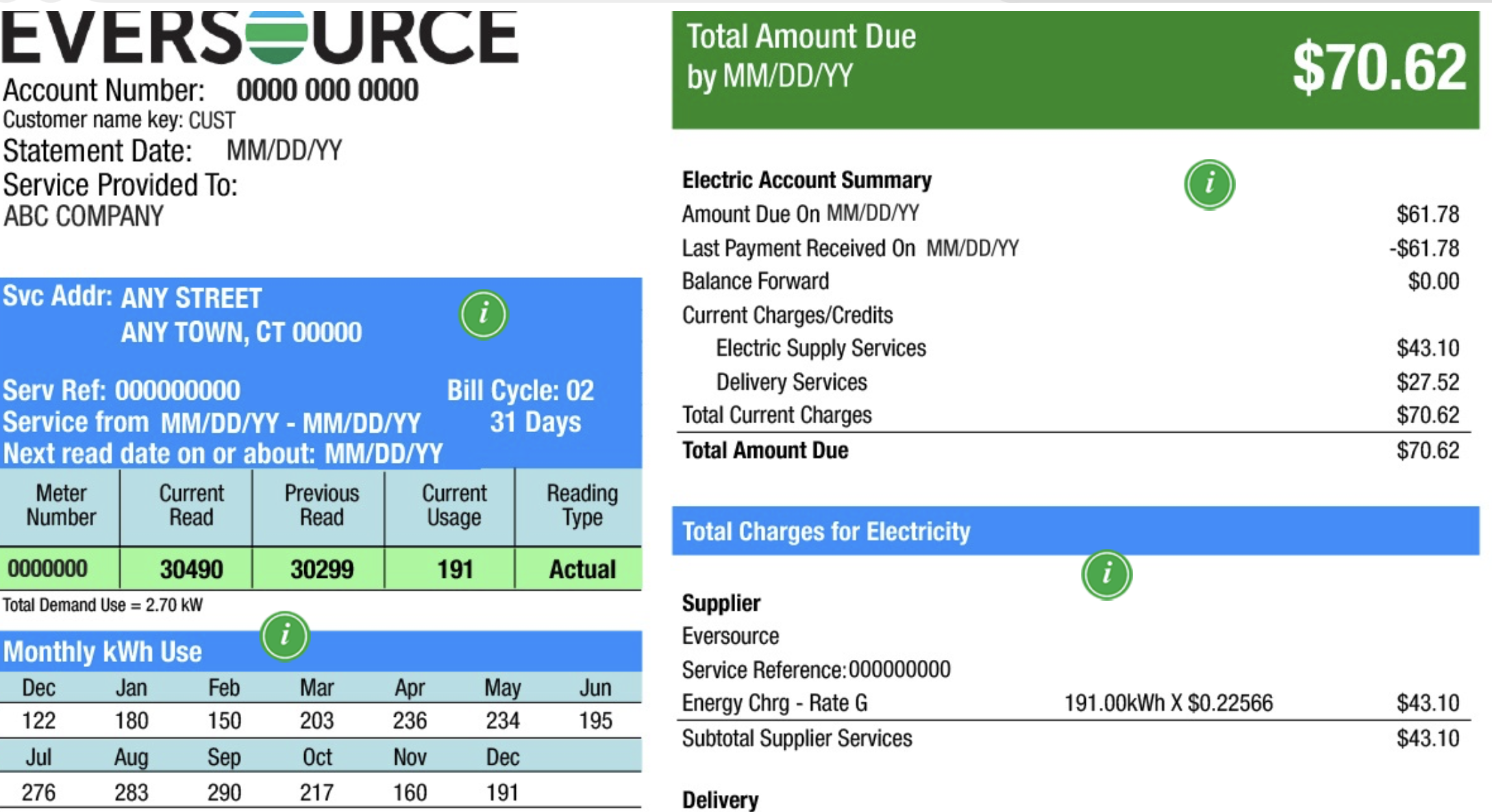
You used 191 kWh of electric and your bill was $70.62
70.62/191= you paid about 37 cents per kWh

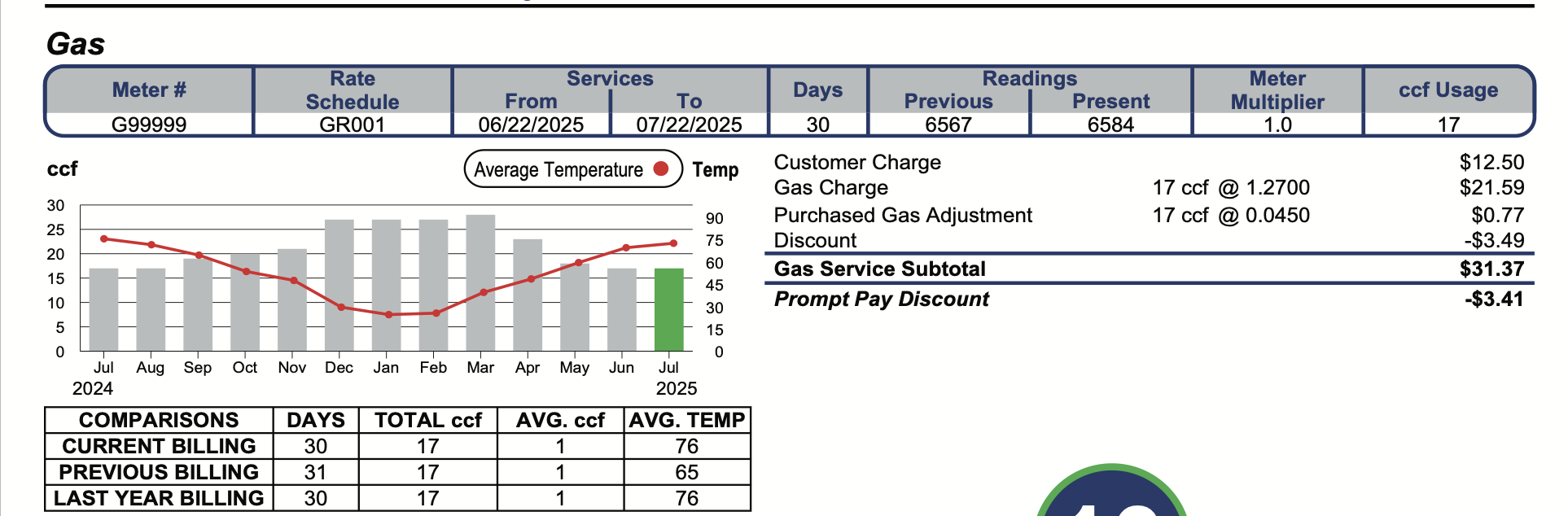
When it comes to Natural gas, it works in a similar fashion, however the cost per “unit” is higher because gas is measured in a unit which has 30X more energy than electric. Note: “therm” or “ccc” are used interchangeably, both being about 100,000 BTU of energy

In the off-season bill sample we see below, the customer used 17 “units” (therms or ccf) of gas and the bill is $31.37
31.37/17=$1.85 per therm

Any information or discussion after the basic figures is either technical or political/economic. It doesn’t matter what the “name” of the individual charges are – all that matters is the total due divided by the units used.


Do Not Use AI for your Energy Questions!

The Bias AND Wrong answers are off-the-charts

The evolution of Machine Learning (AI) is an amazing thing – akin, in many ways, to the public availability of the Internet itself. However, in Energy related subjects I find it to be severly lacking – to the point where it might cost you a LOT of money if you listen to the “advice” being given.

Let’s start with the very basics. AI have no insider information of our Energy situation. Just as you might do, it goes looking around on other sites for information to use for an answer to your query. But, unlike the searches of old, it has an additional layer of bias – some would say extreme bias. AI is not a “honest broker”. It is programmed by corporations and people to reflect certain foundational information. As an obvious example, AI would never question Global Warming or Climate Change and will classify CO2 (what we and plants breathe) as a Pollutant. CO2 is a discussion in itself, a metric – a data point – and excess levels can have consequences, but it should not be looked at in the same way as carcenigenic poisons and small particulates, etc.

AI is very “national” in it’s logic. All of these things are programmed into it. Not only does it have it’s basis as determined by those who write it, it then gathers all the Media and Repetition of such – that reflect many of these biases, and adds that to the mix.

To put it bluntly, saving you money on your Energy bill is not one of the programmed biases. Our General Media (USA)…all added together….is NOT a common sense outlook on your specific situation.

This is very evident is the issue of Electrification – the conversion of most of our home and transportation energy away from multiple fuels (gas, oil, etc.) and into a single source – that being “the Grid” -and our Electric company! Make no mistake about it – this is very new! For decades many consumers have looked at having diverse fuels as a good thing! Independent minded homeowners often have wood burning stoves or a natural gas fireplace – something which will work when the the Grid does not!

So….why is this happening? Why the bias? Pretty simple – the tech brothers all live in a very temperate climate and heating a home is not first on their list! They also live in California, a state with the highest percentage of renewable energy – and so, in their case, electrification makes good sense! But when they tell a homeowner in New England to switch out their Gas Furnace to a heat pump – they might cost said homeowner an extra $500 a month for heating!

An expert like myself – can eventually get AI to give me the correct answer – but it’s quite difficult. I often have to go through 2 or 3 clarifications which no normal homeowner would ever do. Example…might go like this.

Me: Should I get a heat pump water heater
Google: They are extremely efficient!
Me: How much heat do they lose when on standby (I have a instant gas heater).
Google: It’s very little – negligible. Between tank and pipe losses, etc. it migth be 1.5 kWh in a day. Nothing much to be concerned about.
Me: I pay .34 a kWh – so that means $15 a month for nothing…not even for hot water, just for standby
Google: Yes, your price for electric changes the equation.

And it goes on. The conversation, if I left it to AI, would approve of me getting a hot water system which would cost me 4 to 5X as much per month as my gas one.

I really shouldn’t have to say more on ths subject. But for the more technically minded and those who can’t imagine “why” this is the case, I can only guess in this manner. The governments and utilities all predicted a decade back that our Electric would, by now, really be far along in terms of being generated by Renewables (Solar PV and Wind, mostly…along with Hydro and some Nuclear). They didn’t imagine that we’d STILL be less than 20% renewables in 2026-2027. As a result, most all Media and Planning was based on cheap and renewable Electricity. For much of the nation, this is NOT the case. And yet – as far as AI goes, the Big Brain thinks as it is programmed.

Do your homework. But seek the truth. Do not rely on AI to speak the truth about Energy Matters – Google or ChatGPT are not going to pay your energy bills!

I’d welcome comments and rebuttals to this – however, I have saved all my conversations with Google and other AI Agents which prove the bias – so there is really not a “leg to stand on” when it comes to the built-in bias of current AI consumer chatbots.